People always ask why we're based in Hong Kong. The assumption is usually either “tax reasons” (no) or “someone has family there” (also no). The real answer is more interesting than both of those, and it starts with Amani eating dan dan noodles at 2am in Mong Kok and having what she later described as “a professional epiphany, but spicy.”
The Logic Behind the Location
When we were figuring out where to base Mosaic, we had a few criteria. We needed somewhere that sat at a genuine cultural crossroads — not a monoculture with international restaurants. We needed a timezone that could overlap with Asia, the Middle East, and Europe without anyone having to take calls at 3am. And we needed a city where being a multicultural business wasn't a novelty.
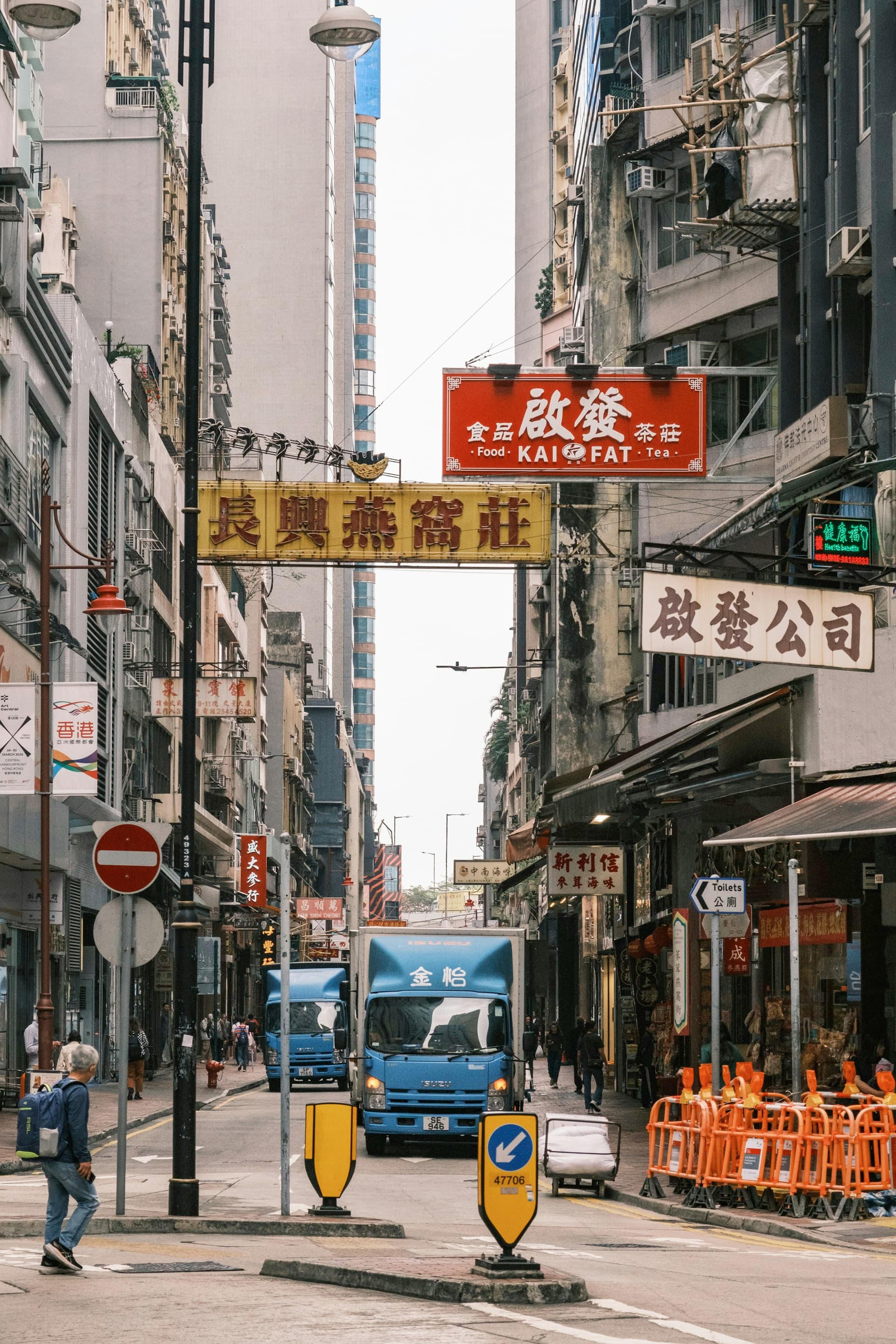
Hong Kong ticked every box. It's genuinely cosmopolitan in a way that isn't just marketing copy. Walk down any street in Kowloon and you'll hear Cantonese, English, Tagalog, Hindi, and Indonesian within five minutes. The South Asian community here is substantial and deeply rooted — not recent immigration, but families who've been here for generations.
And the timezone is, frankly, magic. We can do a morning call with someone in Mumbai, a lunchtime call with Dubai, and an afternoon call with London. All in one working day. Try doing that from New York.
What Living Here Changed About Our Work
I'll be honest: before moving here, I thought I understood cross-cultural work. I'd managed campaigns across multiple markets. I'd worked with creators from different backgrounds. I thought I got it.
Hong Kong humbled me. Fast.
The thing about operating from a genuinely multicultural city is that you can't default to any single cultural framework. In London or New York, there's a dominant culture and everything else is positioned relative to it. Here, there isn't really a default. Every interaction requires you to think about cultural context. Every brief needs to account for the fact that your audience might be consuming content in three different languages on four different platforms.
That forced us to build cultural sensitivity into our process, not as an add-on but as the foundation. And that's made our work better across every market we operate in — not just Asia.
The Campaign That Proved It
Our first big pan-Asian campaign was for a skincare brand launching in Hong Kong, Singapore, and Kuala Lumpur simultaneously. The temptation — and what most agencies would have done — was to create one set of content and translate it. Same messaging, different languages. Efficient. Cheap. And completely wrong.
Beauty standards differ significantly across these three markets. Skincare routines differ. The relationship to sun protection, for example, has completely different cultural drivers in Hong Kong versus KL. The ingredients people are looking for, the textures they prefer, the influencers they trust — all different.
So we ran three parallel campaigns with three sets of local creators. The messaging framework was consistent but the execution was entirely localised. It cost more. It took longer. And it outperformed the brand's previous regional campaigns by a margin that made their CMO call us personally.
Lessons for Brands Going Global
If you're a brand looking to expand into new markets, here's what Hong Kong has taught me:
Don't translate — transcreate. The message needs to be rebuilt for each market, not just translated. The emotional triggers, the cultural references, the humour — none of that translates directly.
Hire local. Not just local translators or local agencies. Local creators who understand the nuances that you literally cannot see from the outside. A creator in Jakarta knows things about Indonesian consumer culture that no market research report will ever tell you.
Respect the differences. Lumping “Asia” together as one market is like lumping “Europe” together. You wouldn't run the same campaign in Finland and Portugal and expect identical results. Don't do it with Thailand and South Korea either.
And finally: go there. Actually go. Eat the food. Walk the streets. Sit in a market at 6am and watch how people actually live. You will learn more in one weekend than in a month of desk research. I promise.
That's what Hong Kong taught us. Not just about Asia — about everywhere. The work is always better when you're close to the culture. Always.
Marcus K. is Head of Partnerships at Mosaic Collective. He has a complicated relationship with Hong Kong's humidity and an uncomplicated love for its food.